
Japanese agri-equipment firm Kubota is taking cues from Suzuki Motor's strategy to establish India as its global production hub, according to a report by Nikkei Asia. The acquisition of Escorts in 2022, leading to the rebranding as Escorts Kubota, a prominent tractor manufacturer in India, which held the fourth-largest global market share, offered Kubota a crucial foothold in the Indian and international markets, complementing its strengths with Escorts' established presence.

Among Sensex shares, Sun Pharmaceutical, Tata Steel, Trent, Bajaj Finance, Mahindra & Mahindra, Bajaj Finserv, Reliance Industries, Axis Bank, Tech Mahindra, Adani Ports, Titan, BEL, and Larsen & Toubro were the major laggards. However, Hindustan Unilever, Maruti Suzuki India, ITC, Tata Consultancy Services and UltraTech Cement were the gainers.

All three Bharti group companies outperformed in CY25 but the biggest gain came from Bharti Airtel, the flagship.

Most of the engines used by Suzuki's two-wheelers in India are manufactured by Maruti at its Manesar plant.

Among the Sensex firms, Mahindra & Mahindra jumped the most by 5.96 per cent. Bajaj Finance, Bajaj Finserv, Trent, ITC and HDFC Bank were also among the gainers. However, Maruti Suzuki India, Bharat Electronics, HCL Tech, NTPC, Power Grid, Infosys and Reliance Industries were among the laggards.

The country's largest carmaker Maruti Suzuki India on Monday said it will hike prices across models from next month amid rising input costs. In a regulatory filing, the company said, ".... over the past year the cost of company's vehicles continue to be adversely impacted due to increase in various input costs." Hence, it has become imperative to pass on some impact of the additional cost to the customers through a price rise, it added.

Maruti Suzuki India Ltd (MSIL), the largest passenger vehicle manufacturer in India, has set a road map to expand its global presence by targeting exports of 800,000 units by the end of this decade -- almost double the approximately 280,000 units sent abroad in 2023-24, Rahul Bharti, executive director, corporate affairs, told Business Standard. The company's upcoming electric vehicle (EV) strategy is expected to play a crucial role in its global ambitions.
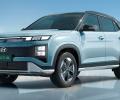
Long standing number two passenger vehicle maker in India, Hyundai Motor India, has slipped to fourth position in the domestic market in terms of retail sales last month behind Maruti Suzuki India, Mahindra & Mahindra and Tata Motors, as per the latest data shared by dealer's body FADA. Hyundai Motor India clocked retail sales of 38,156 units last month, a dip of 20 per cent as compared with 47,540 units in February last year.

Maruti Suzuki India (MSIL) will hold discussions with the Centre and state governments on how the production of compressed biogas (CBG), which can be used in vehicles that run on compressed natural gas (CNG), can be expanded in the country, its majority shareholder Suzuki Motor Corporation (SMC) said. The demand for CNG vehicles has been rising significantly in the country. MSIL sold 145,000 CNG vehicles in the first quarter of 2024-25, marking a 28.3 per cent year-on-year (Y-o-Y) growth.
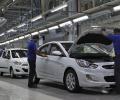
Leading automakers Maruti Suzuki, Hyundai, Mahindra, and Tata Motors saw a dip in dispatches to dealers in August amid dip in demand with many prospective buyers postponing their buys anticipating a reduction in vehicle prices on account of the new GST framework. The country's largest carmaker Maruti Suzuki India reported an 8 per cent year-on-year dip in dispatches of passenger vehicles in the domestic market last month.

Maruti Suzuki India on Friday reported an over four-fold increase in consolidated net profit to Rs 2,112.5 crore in the second quarter ended on September 30, 2022, riding on record sales. The company had posted a consolidated net profit of Rs 486.9 crore in the same period last fiscal, Maruti Suzuki India said in a regulatory filing. Total revenue from operations was at Rs 29,942.5 crore as against Rs 20,550.9 crore in the year-ago period.
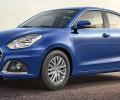
Maruti Suzuki India on Tuesday reported a 28 per cent rise in exports at 263,068 units in 2022, its highest ever overseas shipments. The company's previous highest exports was achieved in 2021 with 205,450 units. The highest exported models in 2022 were Dzire, Swift, S-Presso, Baleno and Brezza, the company said in a statement.

Maruti takes a leap in terms of technology with features like ADAS, a 360-degree camera, ventilated seats, a powered tailgate, audio system with Dolby Atmos and much more.

Among Sensex firms, Mahindra & Mahindra was the biggest gainer, gaining 1.7 per cent after the October sales data. Tata Motors Passenger Vehicles (TMPV) rose by 1.69 per cent. Eternal, State Bank of India, Bharti Airtel and Kotak Mahindra Bank were also among the major gainers.

EV manufacturers point out that converting a regular petrol car into a flex-fuel vehicle requires only about Rs 17,000-25,000 per unit, whereas developing an EV demands vastly greater investments in research, battery development, and localisation.
President Droupadi Murmu on Saturday approved 139 Padma awards including seven Padma Vibhushans, 19 Padma Bhushans and 113 Padma Shris.

According to Siam data, Indian auto companies sold 982,456 units of utility vehicles in the first half of FY23, a 50.29 per cent growth over the corresponding period last year.

The country's largest carmaker Maruti Suzuki India (MSI) on Thursday said it has appointed Hisashi Takeuchi as the new managing director and CEO with effect from April 1, 2022. The company's board in its meeting held on Thursday, appointed Takeuchi as the managing director and CEO from April 1, consequent to the completion of the term of Kenichi Ayukawa on March 31, 2022, MSI said in a statement. In order to facilitate a smooth transition, Ayukawa will continue as a whole-time Director designated as Executive Vice Chairman till September 30, 2022, and will continue to provide guidance to the auto major, it added.

It is a marketplace of attention, where legacy publishers, global franchises, and consumer brands meet to make the most of India's expanding fandom economy.

Stock market sentiment is likely to remain optimistic going ahead, though some consolidation cannot be ruled out after the recent sharp rally in the benchmarks, analysts said. According to experts, the Nifty and Sensex could indeed move towards new record highs before the end of the year, if global cues stay supportive, crude oil prices remain benign and there is continued domestic earnings momentum.

'...the auto industry to get back to 7% to 8% annual growth.' 'High growth in the SUV segment alone will not achieve this, as it is a small market.'

The automobile industry has sought government support in expediting approvals from the Chinese government for importing rare earth magnets used in various applications, including passenger cars. As per the industry sources, various domestic suppliers have already sought approval from the Chinese government through their local vendors in China.
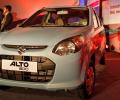
The country's largest automobile maker Maruti Suzuki India (MSI) on Monday said it will hike prices of its cars in the second quarter of the current fiscal due to increase in the input costs. "Over the past year, the cost of the company's vehicles continue to be adversely impacted due to increase in various input costs. "Hence, it has become imperative for the company to pass on some impact of the above additional cost to customers through a price rise," Maruti Suzuki India said in a regulatory filing.

Maruti Suzuki India will increase the prices of its vehicles 'substantially' from next month as it looks to offset the impact of rising input costs and make provisions to update the model range to conform to stricter emission norms which kick in from April 2023. In a regulatory filing on Friday, the country's largest carmaker said it continues to witness increased cost pressure driven by overall inflation and recent regulatory requirements. While the automaker makes maximum effort to reduce cost and partially offset the increase, it has become imperative to pass on some of the impact through a price increase, it added.
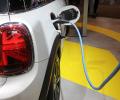
Maruti Suzuki India will launch electric vehicles in the country only after 2025 as demand for such vehicles at the moment is less and it would like to sell around 10,000 units a month whenever it enters the electric mobility space, company chairman RC Bhargava said on Wednesday. Addressing a virtual conference on the company's second quarter earnings, he said under the current circumstances a lot of things in the EV ecosystem such as batteries, charging infrastructure and electric supply are done by other parties and therefore the costing is not in the hands of the company. Also with fuel prices going up, car market leader Maruti Suzuki India is intensifying its focus on more CNG offerings of its models.
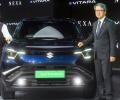
MSIL, which currently has a subscription service that allows customers to lease its petrol-run and strong hybrid vehicles on a flexible, long-term basis without ownership commitments, will introduce a leasing service as well.

In a filing to the BSE on Monday, Maruti Suzuki India said Suzuki Motor Corporation's stake in MSI has increased to 56.2 per cent from 54.2 per cent due to a share swap agreement with the domestic car market leader to acquire Suzuki Powertrain India Ltd.

Domestic passenger vehicle wholesales were down 0.8 per cent at 3,44,656 units in May this year as compared to 3,47,492 units in the same month last year, Society of Indian Automobile Manufacturers said on Monday.

The government has no say in where the country's refiners source oil from because these are commercial transactions.

Maruti Suzuki India on Monday said the production at its plant in Gurgaon has been impacted due to strike at Suzuki Powertrain India Ltd (SPIL), which supplies engines to MSI.

Cash holdings of equity mutual fund (MF) schemes moderated in September amid a slowdown in fresh inflows. Equity MF schemes held cash worth Rs 1.76 trillion at the end of September 2025 - about Rs 400 crore lower than the previous month, according to a report by Nuvama Alternative & Quantitative Research.

Maruti Suzuki India (MSIL) said on Thursday its operations are unaffected by the global rare earth magnet shortage, but added that the situation is "uncertain and evolving". The firm said it is exploring multiple solutions to maintain continuity in operations and will notify stakeholders in case of material impact.

Priced at Rs 754,689, this is the sixth model from the company's portfolio after Alto, WagonR, Swift, Baleno and Dzire to be BS-VI compliant.

Maruti Suzuki and Hyundai Motor India on Monday reported a dip in passenger vehicle dispatches to dealers in the domestic market last month as the companies tried to adjust vehicle inventory amid slowing demand. Maruti Suzuki India said it "calibrated supplies" to the dealers, aligning with the industry's retail sales projections amid India-Pakistan conflict and a dip in sales of entry-level cars.

Manufacturers of passenger vehicles (PVs) in the first half of the calendar year (2025) reported a modest 0.5 per cent year-on-year increase in wholesale dispatches, while retail sales grew 2.5 per cent for the same period, reflecting a calibrated approach by automakers amid elevated dealership inventories and cautious consumer sentiment. According to the Society of Indian Automobile Manufacturers (Siam), dispatches rose marginally to 2.16 million units, up from 2.15 million units a year earlier.

Maruti Suzuki India on Tuesday said it has increased prices of its entire model range with immediate effect. An estimated weighted average of increase across models is 0.45 per cent, the auto major said in a regulatory filing.

Car purchases in India are largely limited to the top 12 per cent of households with an annual income exceeding Rs 12 lakh, while even small cars have become unaffordable for the remaining 88 per cent, said R C Bhargava, chairman of Maruti Suzuki India Limited (MSIL), on Friday. "How can you get high car sales growth if 88 per cent of the country are below the levels of income where they cannot afford these cars costing Rs 10 lakhs and above?

Maruti Suzuki India and Hyundai reported single-digit sales growth in July with the sports utility segment continuing to drive overall demand in the market. Mahindra & Mahindra witnessed a 29 per cent increase in passenger vehicle dispatches while Tata Motors saw a marginal increase in the wholesales last month. Maruti Suzuki on Tuesday said its total domestic passenger vehicle sales stood at 152,126 units last month as compared to 142,850 units in the year-ago month, a growth of 6 per cent.

The GST Council on Wednesday approved two slabs of 5 per cent and 18 per cent effective from September 22, the first day of Navaratri.

Maruti Suzuki India on Wednesday reported a 42 per cent rise in consolidated net profit to Rs 2,671 crore for the fourth quarter ended March 2023, driven by higher sales, improved realisation and favourable forex movement. The country's largest carmaker logged a net profit of Rs 1,876 crore in the January-March of 2021-22. Net sales during the fourth quarter rose to Rs 32,060 crore compared to Rs 26,749 crore in the year-ago period, Maruti Suzuki India (MSI) said in a regulatory filing.
